
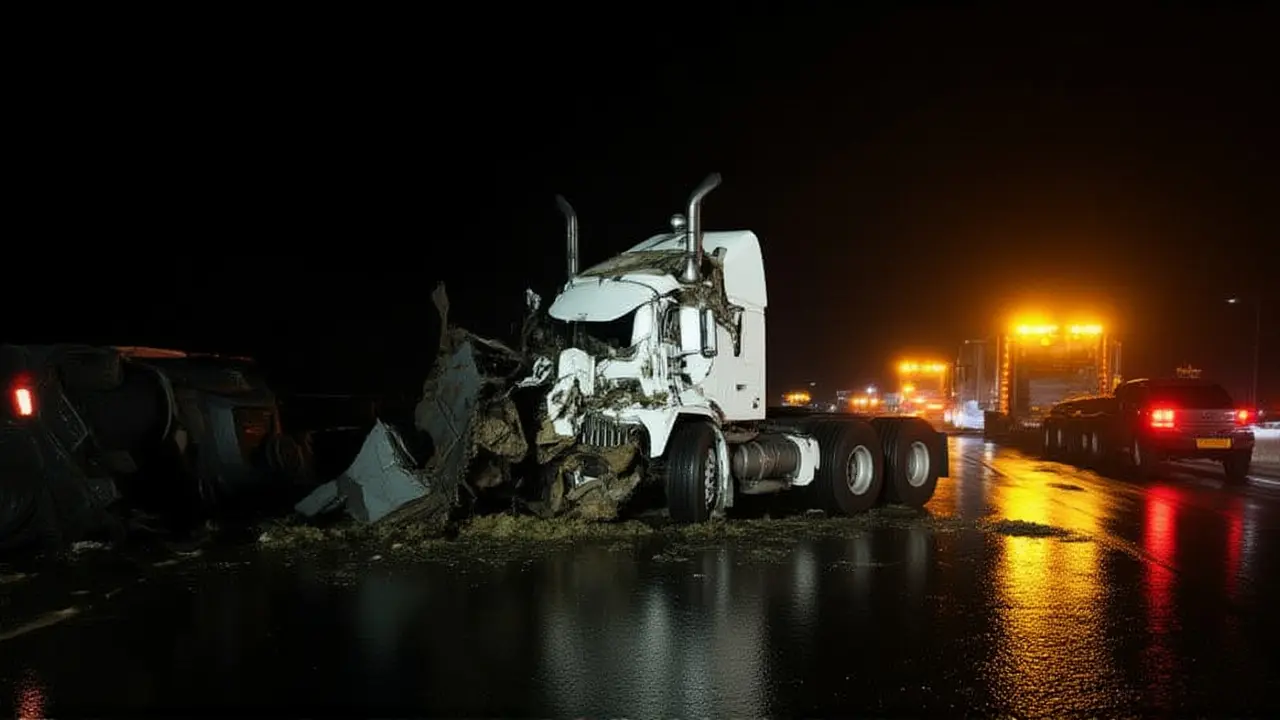
It’s a tragedy that feels less like an accident and more like a failure of planning. On Tuesday, 18 November, an unidentified pedestrian lost their life after being struck by a taxi on the N2 national route near Somerset West in the Western Cape. The collision happened just metres from a pedestrian safety bridge that cost taxpayers R22 million to build. It raises a painful question: if we’re spending millions on infrastructure, why are people still dying on the road?
The incident was reported by Nova News, which highlighted the stark contrast between the expensive safety measure and the fatal outcome. This wasn’t an isolated event either. The headline itself—"Another death on N2 despite R22 million safety bridge nearby"—signals a recurring pattern of fatalities on this stretch of highway.
A Pattern of Fatalities on the N2
Here’s the thing about road safety statistics: they don’t lie, but they often lack context until you look closer. The death near Somerset West is part of a broader, troubling trend along the N2 corridor. Data from Arrive Alive, South Africa’s leading road safety information platform, shows serious incidents occurring regularly in this region.
Just months before this latest fatality, on 4 January 2025, Arrive Alive reported a pedestrian collision at the N2/Jakes Gerwel interchange. One person was knocked down and sustained critical injuries. Then, on 13 June 2026, emergency services responded to a rollover crash at the N2/Symphony Bridge, leaving another patient in critical condition. These aren’t random outliers; they’re data points in a dangerous trajectory.
The common thread? Pedestrians and vulnerable road users facing high-speed traffic with inadequate protection. The R22 million bridge near Somerset West was supposed to be a solution. Instead, it stands as a silent witness to continued danger.
Why Safety Infrastructure Isn’t Enough
You might think that building a bridge solves the problem. But wait—infrastructure alone doesn’t change human behaviour. Experts in urban planning often point out that "safety in numbers" and "visible enforcement" are just as crucial as physical barriers. If pedestrians don’t feel safe using the bridge, or if drivers don’t respect the zones around it, the investment yields little return.
In Somerset West, the bridge exists, yet people are still crossing at grade level. Why? Perhaps the bridge is inconveniently located. Maybe lighting is poor. Or maybe there’s simply no awareness campaign telling commuters where the safe crossings are. Without addressing these behavioural and design nuances, even a R22 million project can fail to save lives.
Community and Official Responses
Local residents in the Helderberg region have long voiced concerns about N2 safety. While specific quotes from officials weren’t available in the initial reports, the community’s frustration is palpable. When you lose someone you know—or see another headline about a preventable death—the trust in local governance erodes quickly.
Nova News’s coverage underscores this sentiment. By emphasizing the word "another," they highlight the repetitive nature of these tragedies. It’s not just about one driver or one pedestrian; it’s about systemic neglect. The Western Cape government has invested heavily in road upgrades, but without consistent enforcement and public education, those funds may be wasted.
What Needs to Change?
So, what’s next? We need more than just bridges. We need integrated safety strategies. This includes:
- Better signage and lighting: Make sure pedestrians know where the safe crossings are, day or night.
- Strict speed enforcement: Use automated cameras to deter speeding near known hazard zones.
- Public awareness campaigns: Educate drivers and pedestrians about shared responsibility on the N2.
- Regular audits: Review accident data quarterly to identify new hotspots before they become deadly.
Without these steps, we’ll keep seeing headlines like this one. And every time, the cost won’t just be measured in rands—it’ll be measured in lives lost.
Frequently Asked Questions
Where exactly did the pedestrian die on the N2?
The fatal collision occurred on the N2 national route near Somerset West in the Western Cape, specifically within metres of a recently constructed pedestrian safety bridge. The exact kilometre marker wasn't specified, but the proximity to the R22 million infrastructure project highlights the irony of the location.
How much did the safety bridge near Somerset West cost?
The pedestrian safety bridge cost R22,000,000 (South African Rand) to construct. This significant public investment was intended to reduce pedestrian-vehicle conflicts on this busy stretch of the N2, yet fatalities continue to occur nearby.
Are there other recent accidents on the N2 in the Western Cape?
Yes. According to Arrive Alive, a pedestrian was critically injured in a collision at N2/Jakes Gerwel on 4 January 2025. Additionally, a rollover crash at N2/Symphony Bridge on 13 June 2026 left one patient in critical condition. These incidents suggest ongoing safety challenges across the N2 corridor.
Who reported the death of the pedestrian near the bridge?
The incident was reported by Nova News, a local media outlet covering the Helderberg region. Their article, published on 26 November 2025, emphasized that this was not the first fatality on this section of the road, drawing attention to the ineffectiveness of current safety measures.
Why do pedestrians still cross dangerously despite the bridge?
While the bridge provides a safe option, pedestrians may still cross at ground level due to inconvenience, poor lighting, lack of awareness, or habit. Safety experts argue that infrastructure must be paired with education and enforcement to change behaviour effectively.
Manish gupta
June 25, 2026 AT 17:57Oh look, another R22 million bridge that does absolutely nothing. Shocking. I am sure the engineers who built it are weeping in their expensive offices right now. It is not like people have always been stupid and reckless. The solution is obviously to just ban all pedestrians from existing near roads. Then nobody dies. Simple logic for simple minds.
Sanjay Kumar
June 26, 2026 AT 02:32I think we need to look deeper than just the money spent. Infrastructure is only one piece of the puzzle. If the design doesn't match human behavior, it fails. We must understand why people choose the dangerous path over the safe one. Is it convenience? Fear? Habit? Solving this requires empathy and observation, not just concrete and steel. We should ask ourselves what the community actually needs rather than what looks good on a budget sheet.
Gaurav Jangid
June 27, 2026 AT 07:56It’s so tragic!!! :( My heart breaks for the family!! Why do we keep doing this?! The system is broken! 😭😭 We need love! We need safety! Not just bridges but hearts! 💔💔
Ghanshyam Gohel
June 27, 2026 AT 21:11The data presented here is quite alarming. It suggests a systemic failure in urban planning and enforcement protocols. One must consider the psychological impact on the local community when such preventable tragedies occur repeatedly. The lack of visible enforcement undermines the physical infrastructure entirely. We require a more rigorous approach to speed management and public education campaigns immediately.
Nathan Lemon
June 28, 2026 AT 02:25In many cultures, the concept of shared space is deeply ingrained, yet modern infrastructure often ignores these social dynamics. The bridge represents a Western ideal of separation that may not resonate with local commuting habits. It is essential to engage with the cultural context of the Helderberg region to create solutions that are both effective and respectful of local traditions.
Abhijit Pawar
June 28, 2026 AT 17:59Stop blaming the bridge. Blame the drivers. Speed cameras now. Enforce laws strictly. No excuses. Safety is non-negotiable. Act now.
lavanya tolati
June 30, 2026 AT 00:50i feel for the families involved. it is heartbreaking to see life lost so carelessly. the bridge might be there but if it feels unsafe or too far people will take risks. we need to make the safe choice the easy choice. lighting matters so much at night. please let us know how we can help raise awareness in our communities.
srinivasan sridharan
July 1, 2026 AT 18:41One could argue that the investment was necessary regardless of the outcome. However, the sarcasm in the air is palpable when millions vanish without saving lives. Perhaps the real issue lies in the complacency of those who approve such projects without rigorous testing phases. It is an optimistic view to think that one structure solves complex behavioral issues.
Anant Kamat
July 2, 2026 AT 18:12Just watching this unfold is tough. People get desperate to get to work or home and shortcuts seem logical in the moment. The bridge is probably fine but maybe the access points are bad. Drivers need to slow down too. It's a mix of everything really. Hope they fix it soon because every day counts.
Indrani Dhar
July 4, 2026 AT 17:56it is all a setup really. they build the bridge to fail so they can justify more spending. the lights are dimmed on purpose to cause accidents. think about it. why would a r22m bridge be ignored unless someone wanted it ignored. the government knows exactly where the blind spots are and they profit from the chaos. wake up sheeple.