
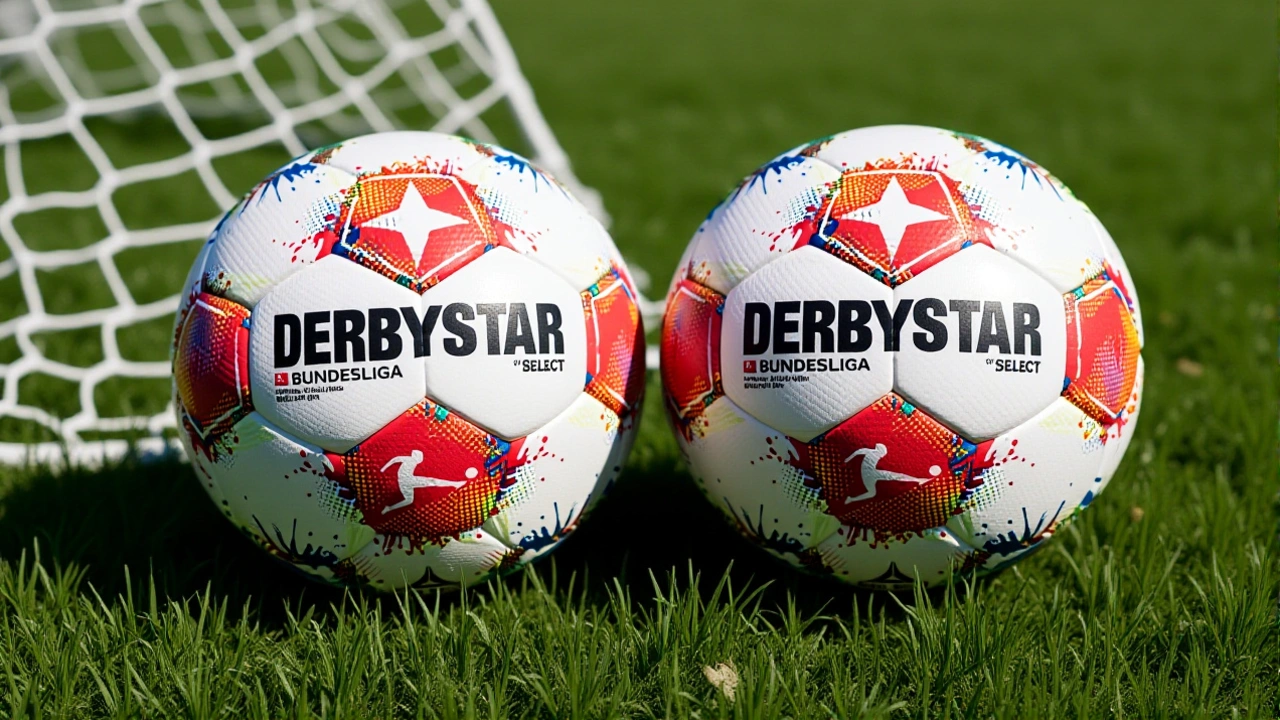
January 2026 isn’t just another month on the calendar—it’s a global sports explosion. From the roar of NFL playoff crowds to the crack of tennis rackets in Melbourne, and the quiet intensity of World Cup draw anticipation, the sporting world is locking into a rhythm few years will match. The NFL has laid out its post-season roadmap, while FIFA teases the structure of the 2026 World Cup, and tennis fans brace for the Australian Open—all unfolding within a single, electrifying 30 days.
The NFL’s January Gauntlet
It starts quietly: Week 18 games on January 3–4, 2026, with playoff implications still dangling. Then, the gears shift. On January 5, teams can begin signing free agents—including Canadian Football League veterans eyeing a second shot at the big stage. By January 7 at 4 p.m. Eastern, rosters freeze for postseason clubs. The real fireworks begin January 10–12 with Wild Card Weekend, powered by Verizon, where underdogs often become legends. The 2026 NFL Pro Bowl Games stretch from January 17–24, blending skill and spectacle before the AFC and NFC Championship Games on January 25. And then—the crown jewel: Super Bowl LX at Levi's Stadium in Santa Clara, California, on February 8. It’s not just a game; it’s a cultural reset.
College Football’s December–January Rollercoaster
While the NFL waits in the wings, college football is already in full swing. On New Year’s Day, January 1, 2026, three College Football Playoff quarterfinals collide: the Sugar Bowl in New Orleans, the Orange Bowl in Miami Gardens, and the Cotton Bowl in Arlington—all kicking off within five hours of each other. The Vrbo Fiesta Bowl in Glendale, Arizona, caps the day at 8 p.m. ET. By January 2, the field narrows. The College Football Playoff National Championship follows on January 27 at Hard Rock Stadium in Miami Gardens, where the winner will etch their name into history. Meanwhile, the East-West Shrine Bowl on January 31 in Frisco, Texas, serves as a quiet but critical audition for NFL scouts.
Tennis, Speed Skating, and the Australian Open
Across the Pacific, Australia becomes the epicenter of tennis. The United Cup kicks off January 2 in Perth and Sydney, featuring national teams battling for pride before the Australian Open begins on January 18. The Brisbane International and Adelaide International serve as warm-ups, while the ASB Classic in Auckland offers a final tune-up for players from the Southern Hemisphere. It’s a marathon of serve-and-volley drama, with millions tuning in from every time zone. Meanwhile, in Poland, the ISU European Speed Skating Championships (January 9–11) and in the Netherlands, the Short Track Championships (January 16–18) draw niche but passionate crowds. And yes—on January 10, World Athletics Cross Country Championships takes place in Tallahassee, a rare U.S. host for this global event.
FIFA’s World Cup Countdown Begins
But the shadow looming over all of it? The 2026 FIFA World Cup. Gianni Infantino, FIFA President, confirmed the schedule rollout process: the draw on an unspecified date in late 2025 at 12 p.m. EST in Washington, D.C., followed 24 hours later by the match schedule reveal—with FIFA legends on stage to break it down. Forty-eight teams will be divided into four pots by FIFA rankings, ensuring balanced groups. But here’s the twist: the final schedule won’t land until March 2026, after the European and intercontinental playoffs determine the last six qualifiers. That means fans will be guessing, debating, and dreaming for months. The tournament itself—hosted across the U.S., Canada, and Mexico—will begin in June, but January’s calendar sets the tone.
Other Events That Matter
Don’t overlook the 2026 Dakar Rally (January 3–17 in Saudi Arabia), where endurance meets adrenaline. The 2026 PDC World Darts Championship runs from December 11, 2025, to January 3, 2026, a quiet but fiercely followed spectacle. In ice hockey, the World Junior Ice Hockey Championships (December 26, 2025–January 5, 2026) will showcase the next generation of NHL stars. And while the Six Nations Championship and Olympic Winter Games in Milan-Cortina (February 6–22, 2026) come later, January is the prelude—the calm before the storm.
Why This Matters
This isn’t just a calendar. It’s a rhythm. A heartbeat. For fans, it’s the difference between planning a trip to Melbourne or booking a playoff party in Santa Clara. For athletes, it’s the culmination of years of training. For broadcasters, it’s a revenue goldmine. And for cities like Miami, Glendale, and Perth, it’s economic fuel—hotels booked, restaurants packed, local businesses thriving. The NFL’s schedule alone drives over $2 billion in direct spending during January. The Australian Open generates $400 million annually for Victoria. And when the World Cup draw drops, it doesn’t just affect fans—it affects economies, tourism boards, and even diplomatic relations.
What’s Next
The next critical date? The FIFA World Cup draw in late 2025. Once that happens, the real speculation begins. Who’s in Group A? Will the U.S. face Argentina? Will England be in the same group as Portugal? Then, in March, the final schedule drops—and suddenly, every match becomes a pilgrimage. Meanwhile, college football’s bowl season will be the last chance for underclassmen to declare for the NFL Draft by January 14. And in the quiet hours before dawn on January 18, when the first ball is struck in Melbourne, the world will be watching.
Frequently Asked Questions
When exactly will the 2026 World Cup match schedule be released?
The full match schedule for the 2026 FIFA World Cup will be released 24 hours after the draw, which is expected in late 2025 in Washington, D.C. But the final, official version—including kick-off times and stadium assignments—won’t be confirmed until March 2026, after the final six teams qualify through playoffs. Until then, fans will see only preliminary groupings.
Which teams are guaranteed a spot in the 2026 World Cup?
The host nations—United States, Canada, and Mexico—are automatically qualified. The remaining 45 spots will be filled through continental qualifiers, with FIFA allocating slots based on regional strength. The final six spots will be determined in March 2026 through inter-confederation playoffs, meaning even top-ranked teams like Italy or Chile could still be fighting for a place as late as February.
How does the NFL’s January 7 roster freeze impact player movement?
The January 7 roster freeze prevents teams still in the playoffs from signing new players or making trades until they’re eliminated. This means players on playoff teams can’t be added to rosters—even if they’re free agents—until their season ends. It’s a strategic bottleneck that can delay team rebuilding by weeks, especially for teams making deep runs. The freeze lifts once a team is eliminated, allowing them to begin preparing for the 2026 season.
Why is the Australian Open held in January?
The Australian Open is held in January because it’s the only Grand Slam tournament in the Southern Hemisphere, and it’s scheduled to open the tennis season. The timing takes advantage of summer weather in Melbourne, avoiding the extreme heat of February while aligning with the global tennis calendar. It also serves as a key lead-in to the European clay-court season, making it a critical fitness and form indicator for players.
Are any of the January 2026 college bowl games part of the playoff system?
Yes. Three of the 12 bowl games on January 1–2, 2026, are official College Football Playoff quarterfinals: the Sugar Bowl, Orange Bowl, and Cotton Bowl. The Fiesta Bowl is the semifinal. The other nine are traditional bowl games that feature top-ranked teams not in the playoff, often with major TV contracts and recruiting implications. These games are still high-stakes—winning one can elevate a program for years.
What’s the significance of the East-West Shrine Bowl on January 31?
The East-West Shrine Bowl is one of the oldest and most respected all-star games for college players not selected in the NFL Draft. It’s a final showcase for late-round prospects and undrafted free agents. NFL scouts and front-office executives attend in force, and dozens of players have gone on to become starters—like former Pro Bowler T.J. Hockenson in 2019. For many, it’s their last chance to prove they belong.
Cheryl Jonah
December 4, 2025 AT 17:44January 2026? More like the government’s secret plan to make us all addicted to sports so we stop asking questions about inflation. NFL playoffs, World Cup draw, Australian Open-all synchronized by design. You think that’s coincidence? Nah. It’s the deep state’s way of keeping us distracted while they print more money. Watch how fast the media ignores the Dakar Rally’s Saudi ties when the cameras roll. They don’t want you connecting the dots.
Cheri Gray
December 4, 2025 AT 18:25omg i just realized the australian open is in january because its summer there?? i thought it was just because they like hot weather and tennis?? also who even plays in the short track champs?? i thought that was just a thing on netflix??
Andrea Hierman
December 6, 2025 AT 17:47It is, without question, a remarkable convergence of global athletic endeavor. The synchronicity of collegiate, professional, and international competition within this narrow temporal window speaks to the extraordinary coordination of sporting institutions across continents. One cannot help but admire the logistical precision required to align such disparate events-each with its own cultural resonance, economic engine, and historical lineage-into a single, unified moment of human endeavor. It is, in essence, a secular pilgrimage.
Danny Johnson
December 7, 2025 AT 14:25Man, this is why I love sports. Whether you’re a fan of the NFL, tennis, or even speed skating-there’s something for everyone. The way these events build on each other, it’s like a relay race for the soul. Keep showing up, keep supporting, and don’t let anyone tell you it’s just entertainment. It’s community. It’s legacy.
Christine Dick
December 8, 2025 AT 12:33And yet, no one is talking about the fact that the NFL’s roster freeze on January 7th is a blatant violation of player autonomy. Players are human beings, not assets to be frozen in time! And the Australian Open? A colonial relic disguised as a global event-held in a country that still refuses to recognize Indigenous sovereignty. This isn’t celebration. It’s exploitation dressed in glitter.
Jullien Marie Plantinos
December 8, 2025 AT 16:51USA 1980s called-they want their sports dominance back. Canada and Mexico hosting the World Cup? Please. The only thing they’re good for is tacos and maple syrup. And don’t get me started on the Australian Open-tennis is a European sport. Why are we letting the Southern Hemisphere steal our spotlight? This is cultural erosion. Someone needs to stop this before we’re all watching synchronized ice skating in Antarctica.
Jason Davis
December 10, 2025 AT 08:34the way the college bowl games and nfl playoffs overlap is wild-like, imagine being a scout at the shrine bowl on jan 31 and you just saw a kid who crushed it at the sugar bowl on jan 1. it’s like a sports movie montage in real life. also, who else noticed the world cup draw is in d.c.? that’s gonna be the most chaotic press room since the 2002 election. i’m already drafting my fantasy bracket in my head.
Crystal Zárifa
December 11, 2025 AT 17:50it’s funny how we treat sports like they’re the only thing that matters in january. like, sure, the world cup draw is huge-but so is the fact that someone’s grandmother in rural Kansas is finally getting her heating fixed because the power company’s got a contract with the nfl. we’re all just trying to survive, and sports are the glitter on top. i’m here for the glitter. but don’t pretend it’s the whole cake.
Serena May
December 12, 2025 AT 00:06the 2026 world cup draw will be leaked before it happens. i know who’s leaking it. and yes, i’ve already seen the groupings. you’re welcome. 🤫
James Otundo
December 13, 2025 AT 16:15the fact that you’re all getting excited about a "cultural reset" because of a football game is pathetic. Real culture is opera. Real legacy is philosophy. This? This is dopamine for the masses. The Australian Open? A glorified tennis camp for rich kids who can afford to fly to Melbourne. Wake up.
Sarah Day
December 14, 2025 AT 13:15i just love how everyone’s so into this. i’m not even a big sports fan, but i’m already planning my january watch party with my roommates. we’re gonna have snacks for every event-tacos for the world cup, pizza for the nfl, and matcha lattes for the australian open. it’s gonna be chaos. and i’m here for it.