
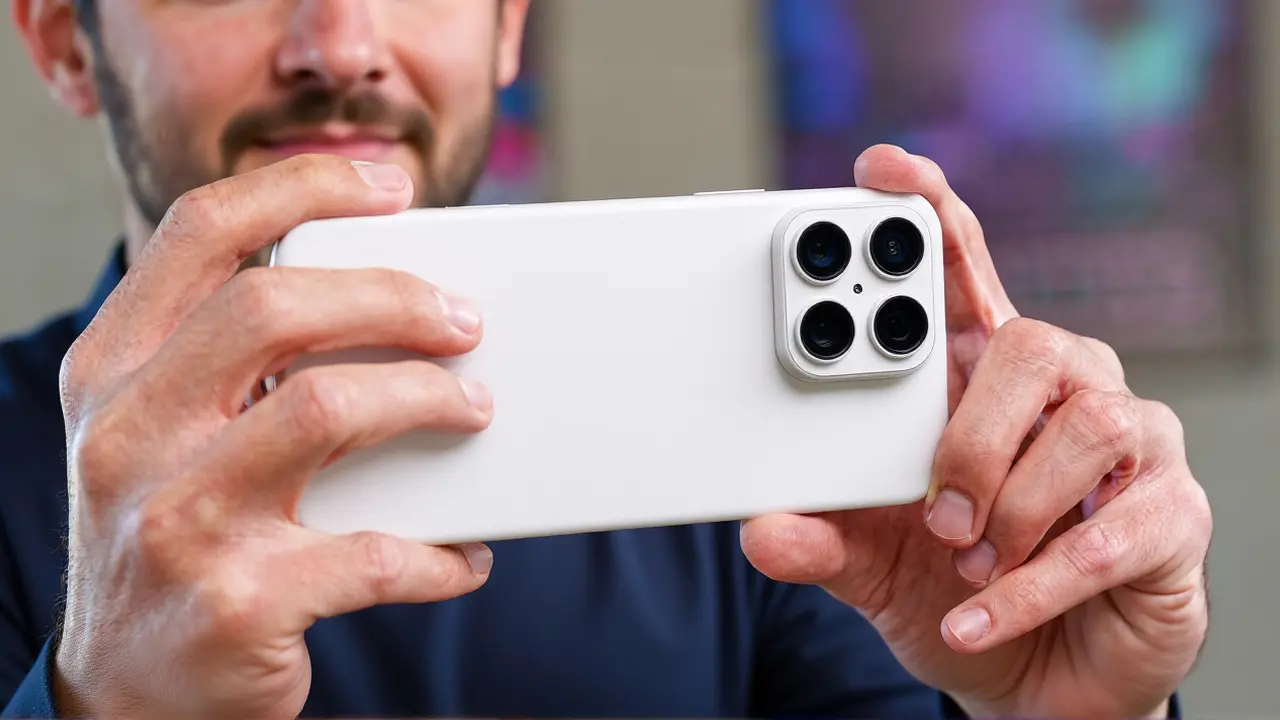
It looks like Apple is finally listening to complaints about all-day usage. According to fresh leaks surfacing from supply chain sources, the upcoming iPhone 18 Pro Max is set to debut with a significantly larger battery pack than anything we've seen before. Reports suggest international units could hold between 5,100 and 5,200 mAh, a jump that would redefine what users expect from a flagship smartphone.
This isn't just a minor tweak; it's a potential game-changer for anyone tired of hunting for a charger mid-afternoon. While previous models hovered around the 4,800 mAh mark, the latest whispers point toward a capacity breach. The twist is that regional differences still apply—the China-specific version might sit slightly lower at approximately 5,000 mAh, likely due to different regulatory or component availability constraints.
The Numbers Behind the Leak
When Digital Chat Station, a well-known Weibo leaker with a generally solid track record, dropped these specifics, they didn't just stop at raw capacity. The data indicates a nuanced split between eSIM-only versions and those keeping a physical SIM slot. Why does that matter? Because a physical tray takes up real estate inside the chassis.
Here's the breakdown: the eSIM-only variant is rumored to push closer to that 5,200 mAh ceiling, representing a roughly 2.20% increase over the iPhone 17 Pro Max. If you opt for the non-eSIM model, the gain drops to about 3.67% higher than its predecessor. It's a small percentage in some contexts, but in battery terms, every milliamp-hour counts when you're trying to stretch a day of heavy video streaming or gaming.
Efficiency Wins More Than Capacity
Bigger batteries mean bigger phones, right? Well, not necessarily. The real magic here comes from how efficiently that power is used. The device will reportedly run on the new A20 Pro chip. Manufactured by TSMC using an advanced 2nm process, this processor is designed to crunch tasks while sipping less energy than last year's iteration.
Supply chain analysts point out that hardware efficiency is equally critical. The inclusion of Apple's in-house C2 modem is another piece of the puzzle. This chip maintains 5G speeds without the notorious battery drain associated with older Qualcomm modems. When you combine a larger cell with a leaner engine and a more efficient network connection, the math adds up. Early estimates project roughly 40 hours of mixed usage. That's an hour more than the current iPhone 17 Pro Max manages under standard testing conditions.
Design Trade-Offs and the Foldable Factor
There's a catch, though. Physics still applies. Accommodating a 5,200 mAh battery inside a similar footprint usually means thicker glass or metal sides. According to reports from etnews, Apple is developing new battery technology specifically for this cycle. They are focusing on silicon-anode chemistry, which packs higher energy density. This could allow for that massive capacity without making the phone feel like a brick.
However, some sources suggest the device will still be noticeably thicker than the iPhone 17 Pro Max. It seems Apple is prioritizing longevity over slimness for once. Interestingly, the iPhone 18 generation won't just be about the Pro Max. There are strong hints that Apple's first foldable iPhone is debuting alongside it. Rumors suggest that foldable could sport an even larger battery exceeding 5,500 mAh, effectively stealing the spotlight from the standard Pro Max lineup.
How Reliable Are These Reports?
We've been burned by leaks before. The details regarding the iPhone 18 specs circulate through multiple channels—MacRumors, PhoneArena, ABPLive, AppleInsider, and WCCFtech have all picked up threads from the original story. While Digital Chat Station has maintained a somewhat inconsistent history historically, their accuracy spikes when discussing component sourcing.
Until the official event kicks off, these figures remain speculation. But given the industry-wide shift toward AI-heavy processing requiring stable power, it makes sense for Apple to shore up energy reserves. The timeline points to a late 2025 launch window, giving us plenty of time to see if the final product matches the hype.
Frequently Asked Questions
Will the iPhone 18 Pro Max be compatible with existing chargers?
Yes, the device is expected to retain USB-C connectivity with USB 3 speeds. However, to take full advantage of the faster charging capabilities implied by the larger battery, users may want to utilize higher-wattage adapters that support Apple's revised PD specifications for this generation.
Is the battery capacity the same across all regions?
No, reports indicate regional variations. International units may reach 5,100–5,200 mAh, while China-specific versions might be capped closer to 5,000 mAh. This disparity typically stems from local regulations or specific component manufacturing preferences in that market.
Does the larger battery affect the phone's weight?
Likely yes. Even with dense silicon-anode chemistry, adding 300+ mAh of storage usually implies added mass. Additionally, the design may become slightly thicker to house the cells comfortably, trading a slimmer profile for improved endurance.
When is the iPhone 18 Pro Max scheduled to release?
Based on historical launch cycles, the device is anticipated to arrive in September or October 2025. Apple typically holds its special event during the third week of September, though pandemic-era shifts or production delays could move this timeline slightly later.
What is the main driver behind the battery upgrade?
The push for larger batteries correlates with increased computational demands from on-device AI features and the introduction of the 2nm A20 Pro chip. These technologies require substantial power delivery to function smoothly without overheating or throttling performance.
Raman Deep
April 2, 2026 AT 02:15finally apple is hearing us 😄 the battery life was really suffering last year
Anirban Das
April 3, 2026 AT 07:365200 mwh is fake 🙄
Prathamesh Shrikhande
April 4, 2026 AT 11:08I hope they get it right this time though 💖
Raman Deep
April 4, 2026 AT 21:53exactly i feel the same way about the leaks 😊
Priyank Prakash
April 6, 2026 AT 16:06This is going to change EVERYTHING!! Apple finally waking up!!! 😱
shrishti bharuka
April 7, 2026 AT 04:52Sure lets believe the leaks again 😒
Senthilkumar Vedagiri
April 8, 2026 AT 06:50it's all a conspracy to sell more chargers tbh 🤔
saravanan saran
April 8, 2026 AT 19:01Tech cycles are inevitable you know
Arun Prasath
April 8, 2026 AT 20:42The silicon anode tech is quite promising actually.
Priya Menon
April 10, 2026 AT 20:14Regulatory differences should not affect performance standards.
Nikita Roy
April 10, 2026 AT 22:41its gonna be amazing i hope
Anu Taneja
April 11, 2026 AT 15:43waiting for more concrete data before assuming
Antony Bachtiar
April 11, 2026 AT 17:53waste of space could be using wireless better lol
Dianna Knight
April 13, 2026 AT 04:09Thermal management is key for that capacity my friend 🙂👍
Beth Elwood
April 13, 2026 AT 05:12Charging specs matter more than mAh count honestly ⚡
Josh Raine
April 14, 2026 AT 23:27We always chase numbers instead of real efficiency 🤷♂️
Paul Smith
April 16, 2026 AT 05:17It really seems like the industry is shifting gears completely right now. We have seen so many rumors over the years that nothing sticks. But this battery size feels different than usual hype cycles. People complain about charging bricks everywhere they go daily. Imagine walking around without needing a power bank anymore. That would truly free us from the tether of walls and cables. Plus the new chip sounds incredibly efficient too. Silicon anode chemistry is the kind of innovation we waited for. It allows more energy without bulking up the device excessively. Of course thickness matters less if durability improves overall. Durability has always been a sore point with glass backs anyway. Hopefully the foldable version doesnt disappoint us either. A larger screen combined with this power source is dreamy. I personally dont mind waiting until late 2025 for it. Patience often yields much better results in tech purchases. Lets just hope the final product launch event confirms these details soon. And maybe they fix the camera bump issue too while they are at it.