
You’ve probably seen the privacy promises before. A cloud provider tells you they respect your data, that they won’t sell it to advertisers, and that their employees don’t peek into your files. It sounds reassuring, right? But there is a massive technical gap between "we promise not to look" and "we physically cannot see." This distinction is the heart of zero-knowledge storage, and understanding it changes how you think about where your files actually live.
Most traditional cloud services operate on trust. They encrypt your data while it travels across the internet and while it sits on their servers, but they hold the keys. If a government agency knocks on their door with a warrant, or if an employee gets curious, those providers can unlock your files because they have the mathematical means to do so. Zero-knowledge architecture removes this vulnerability entirely. In this model, encryption happens on your device-your phone or laptop-before any data leaves it. The provider receives scrambled code that looks like gibberish to them, and more importantly, they never possess the key needed to scramble it back together.
The Math Behind the Promise
When we talk about zero-knowledge, we aren’t talking about a policy document or a corporate ethics board. We are talking about cryptography. Specifically, it’s about ensuring that the service provider has "zero knowledge" of the content because they lack the decryption keys. Think of it like sending a package in a locked box where only you have the key. The shipping company can move the box from point A to point B, but they cannot open it without breaking the lock. In digital terms, this means your files remain encrypted at rest and in transit, and the server only ever stores ciphertext.
This approach shifts the responsibility-and the power-to you. If you lose your password, the provider cannot reset it for you by looking up your file contents. They literally don’t know what’s inside. For many users, this feels risky compared to the convenience of a "forgot password" link, but it offers a level of security that trust-based systems simply can’t match. You aren’t hoping the provider behaves; you are relying on mathematical guarantees. If you want to dig deeper into the mechanics of how this protects your privacy beyond just marketing claims, check out this full explainer on why zero-knowledge matters.
How Client-Side Encryption Works in Practice
So, what actually happens when you upload a file to a zero-knowledge system? Let’s break down the workflow using a modern example like Vaulternal, which builds its entire infrastructure around these principles. When you select a file to upload, your browser or app doesn’t just send the raw file to the cloud. Instead, it uses strong encryption standards, specifically AES-256-GCM, to encrypt the data locally. This process happens entirely on your hardware.
Once the file is encrypted, it’s often broken down into smaller chunks. This isn’t just for speed; it’s for integrity. Each chunk is hashed, creating a unique fingerprint. These encrypted chunks are then distributed across a network rather than sitting on one giant hard drive owned by one company. Because the encryption keys are derived from your password and never leave your device, the storage nodes receiving these chunks see nothing but random noise. Even if a hacker breaches a single node, they get fragments of encrypted data that are useless without the master key held by you.
This method creates a robust digital vault that operates independently of the provider’s internal database structure. The provider manages the plumbing-making sure the chunks are stored reliably and delivered quickly-but they don’t manage the locks. This separation of duties is crucial. It means that even if the company goes bankrupt, gets acquired, or changes its terms of service, your data remains unreadable to anyone who didn’t originally have the key.
Beyond Single Servers: The Power of Decentralized Storage
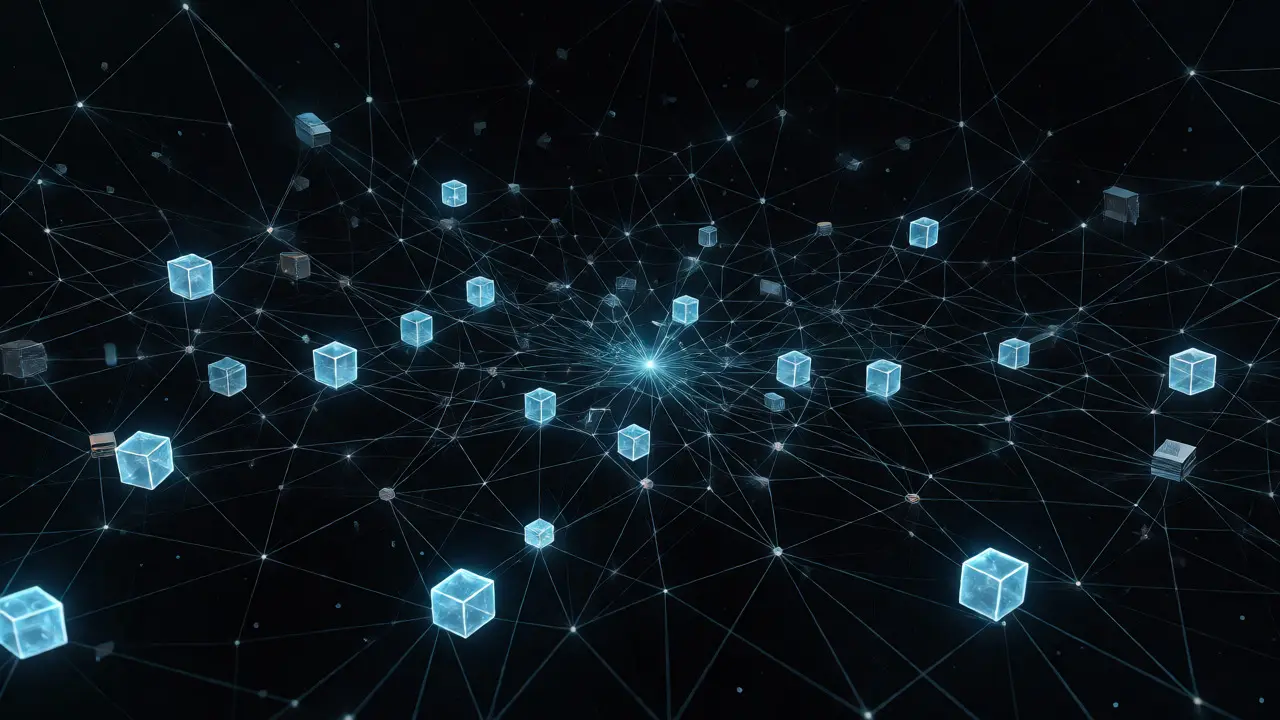
Traditional cloud storage relies on centralized servers. If that central hub goes down, you’re offline. If that company decides to delete your account, you might lose access. Zero-knowledge storage often pairs with decentralized storage networks to solve this durability problem. Instead of storing your files on Amazon AWS or Microsoft Azure alone, advanced systems use distributed ledgers and peer-to-peer networks.
Vaulternal, for instance, utilizes Arweave for permanent storage and IPFS for distribution. Arweave is interesting because it’s designed for permanence; once data is written to its blockchain, it’s intended to be stored forever. Meanwhile, Polygon handles the metadata anchoring. This combination ensures that your files aren’t just hidden from prying eyes, but also resilient against single points of failure. Your data exists across thousands of machines worldwide. No single entity controls the physical location of your bits, which adds another layer of security. Even if the company running the interface disappears, the underlying data persists on the network, accessible as long as you have your keys and a compatible client.
This architecture transforms how we view data ownership. You aren’t renting space on someone else’s computer; you are anchoring your information in a global network. This makes the concept of a digital vault much more tangible. It’s not just a folder in the sky; it’s a cryptographic container that moves with you, independent of the platform’s longevity.

Conditional Access and Long-Term Reachability
One of the coolest features enabled by this type of architecture is conditional delivery. Since the provider can’t read your files, they can’t easily manage complex sharing permissions in the traditional sense. However, smart contracts and trigger systems allow for sophisticated access rules. With Vaulternal, for example, you can set up triggers based on time, inactivity, or trusted contacts. Imagine sending a file to a colleague that only unlocks after three days, or sharing a document with a partner that requires identity verification before opening.
These triggers work without revealing the file contents to the intermediary. The system verifies the condition (e.g., "has 72 hours passed?") and then releases the encrypted key to the recipient. The recipient decrypts the file on their own device. This keeps the chain of custody clear and secure. It’s particularly useful for professional workflows where timing matters, such as releasing a contract proposal exactly when a negotiation starts, or sharing sensitive research data only after a publication date.
Moreover, this setup ensures long-term reachability. Because the data is anchored on-chain and stored decentrally, your files stay accessible over the years independent of any single company. You don’t have to worry about a provider shutting down its free tier or changing its API. As long as the underlying protocols exist, your digital vault remains intact. This durability is a stark contrast to traditional clouds, where data accessibility is tied directly to the business health of the provider.
Choosing the Right Tool for Your Data
Not every file needs zero-knowledge protection. Your grocery list probably doesn’t need military-grade encryption. But for tax documents, medical records, creative portfolios, or legal contracts, the stakes are higher. When evaluating a storage solution, ask yourself: Does the provider hold my keys? Can they search my files for AI features? If yes, they can read them.
If you prioritize privacy and control, look for services that emphasize client-side encryption and transparent architectures. Vaulternal offers a free tier to start experimenting with these concepts, allowing you to test the waters without a financial commitment. Their paid plans expand storage capacity and sharing capabilities, but the core principle remains the same: your keys, your data. By moving away from "trust us" models to "verify with math" models, you take true ownership of your digital life.
What does "zero-knowledge" actually mean in cloud storage?
Zero-knowledge means the service provider encrypts your data on your device before uploading it, so they never possess the decryption keys. They store only ciphertext and cannot read, scan, or share your file contents, regardless of legal requests or internal policies.
Is zero-knowledge storage safer than traditional cloud storage?
Yes, for privacy-focused users. Traditional storage relies on the provider's good behavior and security measures. Zero-knowledge storage relies on cryptography. Even if the provider is hacked or compelled by law, they cannot provide readable data because they don't have the keys to decrypt it.
What happens if I forget my password in a zero-knowledge system?
Since the provider doesn't know your password or keys, they usually cannot reset it for you. If you lose your password, you may lose access to your files permanently unless you have set up recovery mechanisms like backup keys or trusted contact shares beforehand.
How does decentralized storage differ from standard cloud storage?
Standard cloud storage keeps your files on servers owned by one company. Decentralized storage spreads encrypted chunks of your data across a global network of computers. This reduces the risk of a single point of failure and ensures data availability even if one provider goes offline.
Can I share files securely with people who don't use the same service?
Yes. Many zero-knowledge services generate unique links or invite codes that contain the necessary decryption keys. The recipient opens the link in their browser, and the file decrypts locally on their device without needing to install specific software or create an account.