
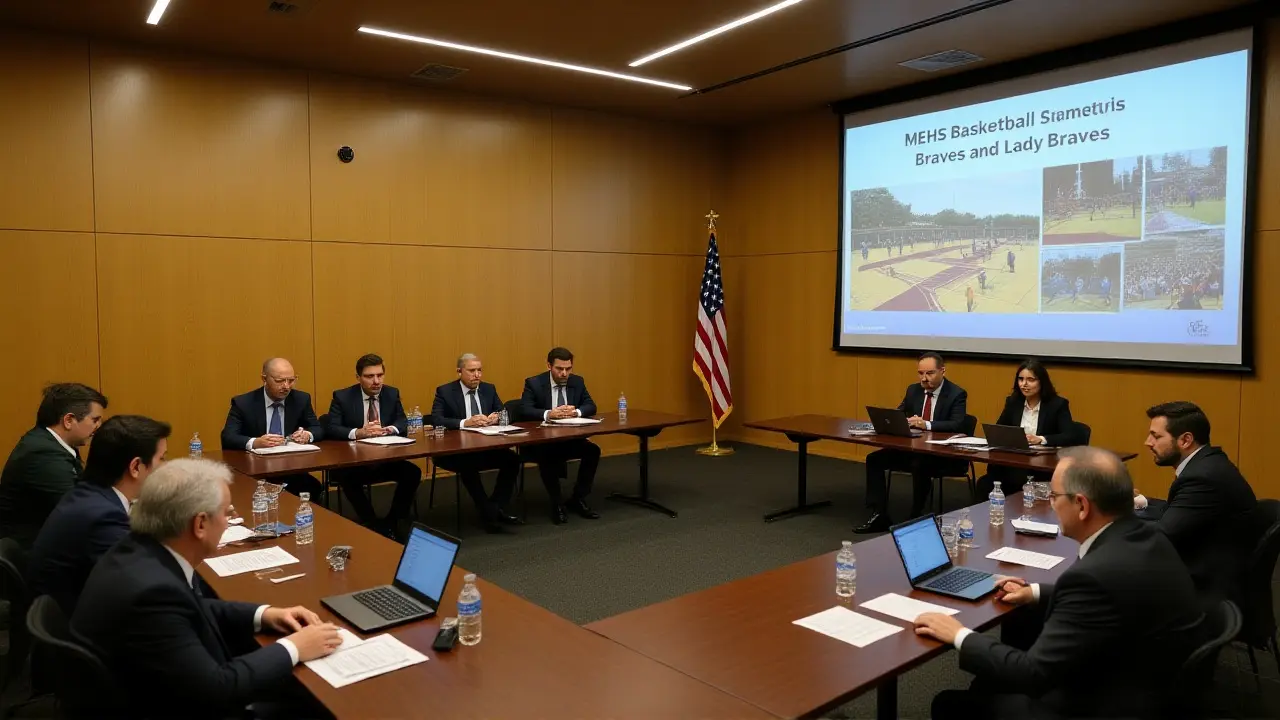
The Alaska State Board of Education has stepped in to address mounting concerns at the state's premier boarding institution, voting unanimously on March 10, 2026, to launch a special ad-hoc committee to investigate conditions at Mt. Edgecumbe High School. The move comes after a wave of outcry regarding the well-being and academic trajectory of the students, many of whom travel from the most remote corners of the state to attend. The board gathered at the Andrew P. Kashevaroff Building in Juneau to finalize the decision, signaling a shift toward more aggressive oversight of the school's management.
Here's the thing: Mt. Edgecumbe isn't just any school. It serves about 400 students, the vast majority of whom are Alaska Native, pulling them from rural villages into a centralized learning environment. When things go wrong there, the ripple effects are felt across entire tribal communities. The new committee is essentially a "deep dive" into why students are leaving and whether the school is actually delivering on its promises.
- Action: Unanimous vote to create an ad-hoc oversight committee.
- Focus Areas: Disenrollment, academic performance, school climate, and student services.
- Timeline: Committee assembly within 30 days; final report due October 2026.
- Student Body: Approximately 400 students, primarily Alaska Native.
- Governance: Managed by the Board in coordination with the Department of Education and Early Development (DEED).
A High-Stakes Investigation into School Climate
The board isn't pulling any punches with the scope of this review. The ad-hoc committee has been handed a heavy mandate to scrutinize four critical pillars: student disenrollment, the quality of student services, overall academic performance, and the general "school climate." It's a broad net, suggesting that the problems at Mt. Edgecumbe are systemic rather than isolated incidents.
The Alaska Department of Education and Early Development (DEED) has a tight window—just 30 days from the March 10 vote—to get the committee's membership sorted. Interestingly, the board is aiming for a diverse coalition. We're likely to see a mix of parents, current students, alumni, school staff, and tribal representatives. They're even bringing in an independent education expert to ensure the findings aren't just an internal "rubber stamp" operation.
The twist is that this committee will have to navigate a complex hierarchy. It will interface directly with the state board while also coordinating with the existing Mt. Edgecumbe High School Advisory Board. It's a bit of a bureaucratic maze, but the goal is clear: find out what's broken and how to fix it.
"We're Going to Figure It Out": Leadership Under Pressure
The tone from the top is one of cautious experimentation. Sally Stockhausen, Board Chair of the Alaska State Board of Education, didn't pretend to have a perfect roadmap. "This is brand new. We're going to figure it out," Stockhausen admitted, acknowledging that the process is as much about discovery as it is about solution.
She explained that the committee's role is to provide recommendations, leaving the final decision on action to the full board. But wait, there's more to the story. Stockhausen is currently in the hot seat herself. During the week of March 9, she appeared before the Alaska House Education Committee as part of her confirmation process for another five-year term. Lawmakers didn't waste time, grilling her on the board's oversight of Mt. Edgecumbe and demanding better communication between the state and the school.
For years, the board relied on verbal reports from the superintendent. Stockhausen is now pushing for a more formal, regular update stream from the local advisory board, admitting that the old way of doing things simply wasn't cutting it.
Legislative Scrutiny and Administrator Responses
While the board is forming a committee, the school's leadership has already been on the defensive. David Langford, Superintendent of Mt. Edgecumbe High School, and Deena Bishop, Alaska State Education Commissioner, have spent recent weeks in the halls of the legislature. They've delivered multiple presentations to lawmakers following a legislative visit to the school—visits that usually happen when there's a crisis brewing.
During the March 10 board meeting, Langford and Bishop presented similar data to the state board. While they've highlighted "improvements being made," the very fact that a special ad-hoc committee was voted in unanimously suggests that the board (and the public) aren't entirely convinced by the current trajectory.
The Broader Impact on Rural Alaska
This isn't just about a single school's administration; it's about the promise of education for rural Alaska Native youth. When students disenroll from a boarding school, they often lose their primary bridge to higher education. If the school climate is toxic or academic standards are slipping, it's the students from the most isolated villages who pay the price.
The ripple effects of this investigation could lead to significant funding shifts or a total overhaul of how state-run boarding schools are managed in the region. If the October 2026 report finds systemic failure, the political pressure on DEED will be immense.
What Happens Next?
The road to October is long. First, the membership of the committee must be finalized. Then, they'll spend the summer and early fall conducting interviews, reviewing data on student exits, and gauging the mood of the student body. The real moment of truth will come in October 2026, when the comprehensive recommendations hit the board's desk.
Until then, all eyes will be on the communication between Juneau and the school. Whether this committee becomes a genuine catalyst for change or just another bureaucratic layer remains to be seen. But for the parents and students of Mt. Edgecumbe, it's a glimmer of hope that their concerns are finally being heard at the highest levels of state government.
Frequently Asked Questions
Why was a special ad-hoc committee created for Mt. Edgecumbe High School?
The committee was formed following a public outcry and concerns regarding the school's environment. Specifically, the Alaska State Board of Education wants to address troubling trends in student disenrollment, gaps in student services, sagging academic performance, and an overall school climate that requires urgent review.
Who will serve on the new oversight committee?
The committee is designed to be inclusive, featuring a mix of stakeholders. Potential members include parents, current students, alumni, school staff, and tribal representatives from Alaska Native communities. To ensure objectivity, an independent education expert will also be included in the group.
When will the findings from this investigation be released?
The committee is expected to conduct its review throughout the first half of 2026. They are tasked with presenting their final, comprehensive recommendations to the full Alaska State Board of Education in October 2026, at which point the board will decide on specific actions.
How does the Alaska State Board of Education manage the school?
The board administers and manages the school in coordination with the Alaska Department of Education and Early Development (DEED). Historically, this involved receiving verbal reports from the superintendent, but the board is now moving toward more regular, written updates from the local advisory board to increase accountability.
What is the significance of the school's student population?
Mt. Edgecumbe serves roughly 400 students, most of whom are Alaska Native and come from rural communities. Because it is a central hub for students from remote areas, any issues with school quality or safety have a disproportionate impact on rural tribal communities across the state.
Mason Interactive
April 10, 2026 AT 19:13This is a huge deal for the villages. Those kids are basically the future of their communities and when a central hub like Edgecumbe fails, it hits everyone in the bush.
Anil Kapoor
April 11, 2026 AT 11:18Creating a committee is just a classic bureaucratic stalling tactic. They spend six months and a mountain of taxpayer money to tell us what we already know: the management is incompetent. It is a performative gesture designed to pacify the public until the news cycle moves on.
Antony Bachtiar
April 12, 2026 AT 05:01its just a rubber stamp lol. they wont change a thing bc the peopel in charge only care bout there own jobs not the kids
Aaron X
April 12, 2026 AT 17:17The systemic dysfunction here represents a failure in the socio-pedagogical infrastructure. We are witnessing a collapse of the institutional praxis where the administrative hegemony prioritizes procedural adherence over the actual holistic development of the student cohort. The ontological crisis of the rural student is exacerbated by this disconnect between the Juneau power center and the peripheral reality of the villages. It is a classic case of institutional inertia masking a deeper atrophy of educational efficacy.
Shelley Brinkley
April 13, 2026 AT 05:43omg typical gov response just make a committee to ignore the real issues and waste more money lol 🙄
Dianna Knight
April 13, 2026 AT 12:37I really hope the inclusion of tribal representatives brings some actual cultural competency to the table ✨. We need a framework that respects the indigenous pedagogical needs of these students while ensuring they have the academic scaffolding necessary for higher ed. It's all about creating a trauma-informed environment that acknowledges the displacement stress these kids feel when they leave their home villages for a boarding school. If they can implement a truly inclusive and student-centric paradigm, there's a real chance for a turnaround 🌿!
Beth Elwood
April 14, 2026 AT 04:06The focus on disenrollment is the most critical part here 📈. If you track the exit data and cross-reference it with the student services gaps, you'll find exactly where the system is leaking. Proper auditing of the academic performance metrics will reveal if the standards were actually lowered to hide the failure 🚩.
Josh Raine
April 14, 2026 AT 15:30Why is it always this way? They wait until the house is on fire to call the fire department! 😡 It is absolutely disgusting that the board relied on verbal reports while kids were struggling. How can we trust a system that treats the education of Native youth as a series of casual conversations? This is a betrayal of the public trust and a failure of basic moral duty to these students! 🤯
Angie Khupe
April 16, 2026 AT 06:52Let's try to stay positive and hope the new committee actually listens to the parents 🌸. Maybe this is the fresh start the school needs to get things back on track ❤️.
Pradeep Maurya
April 17, 2026 AT 18:32The sheer audacity of the leadership to present "improvements" while a unanimous vote for an investigation was occurring is a testament to the disconnect in our current educational governance. In my experience with cultural diplomacy, when the gap between the reported reality and the lived experience of the community becomes this wide, the only solution is a complete overhaul of the administrative layer. We cannot expect the same people who presided over the decline to be the architects of the recovery, yet here we are with the same faces in the legislature halls trying to convince us that everything is fine when the data clearly suggests a systemic hemorrhage of students and talent from the rural heartlands.
megha iyer
April 18, 2026 AT 14:19This is all so boring. Why do people care about one school in the middle of nowhere?
Mel Alm
April 19, 2026 AT 02:44hope they lissen to the kids for once
Paul Smith
April 20, 2026 AT 08:02This is a wonderful opportunity for growth and we should all support the students as they navigate these changes because when we lift up the youth of rural Alaska we are lifting up the entire state and though the road to October is long we must remain energetic in our pursuit of excellence for every single child regardless of how remote there village might be 🌟!
Alex Green international
April 20, 2026 AT 11:50it is a difficult situation for all involved and we should support the staff as well in making these changes
Santosh Sharma
April 22, 2026 AT 11:31just keep pushing for the kids
ANISHA SRINIVAS
April 24, 2026 AT 04:36I'm so hyped to see an independent expert brought in! 🤩 No more internal cover-ups. We need a real audit of those services to see where the money is actually going. Let's get this fixed for the students! 💪✨
Suman Rida
April 25, 2026 AT 13:11The involvement of tribal representatives is a necessary boundary to ensure the state doesn't overstep without local context.